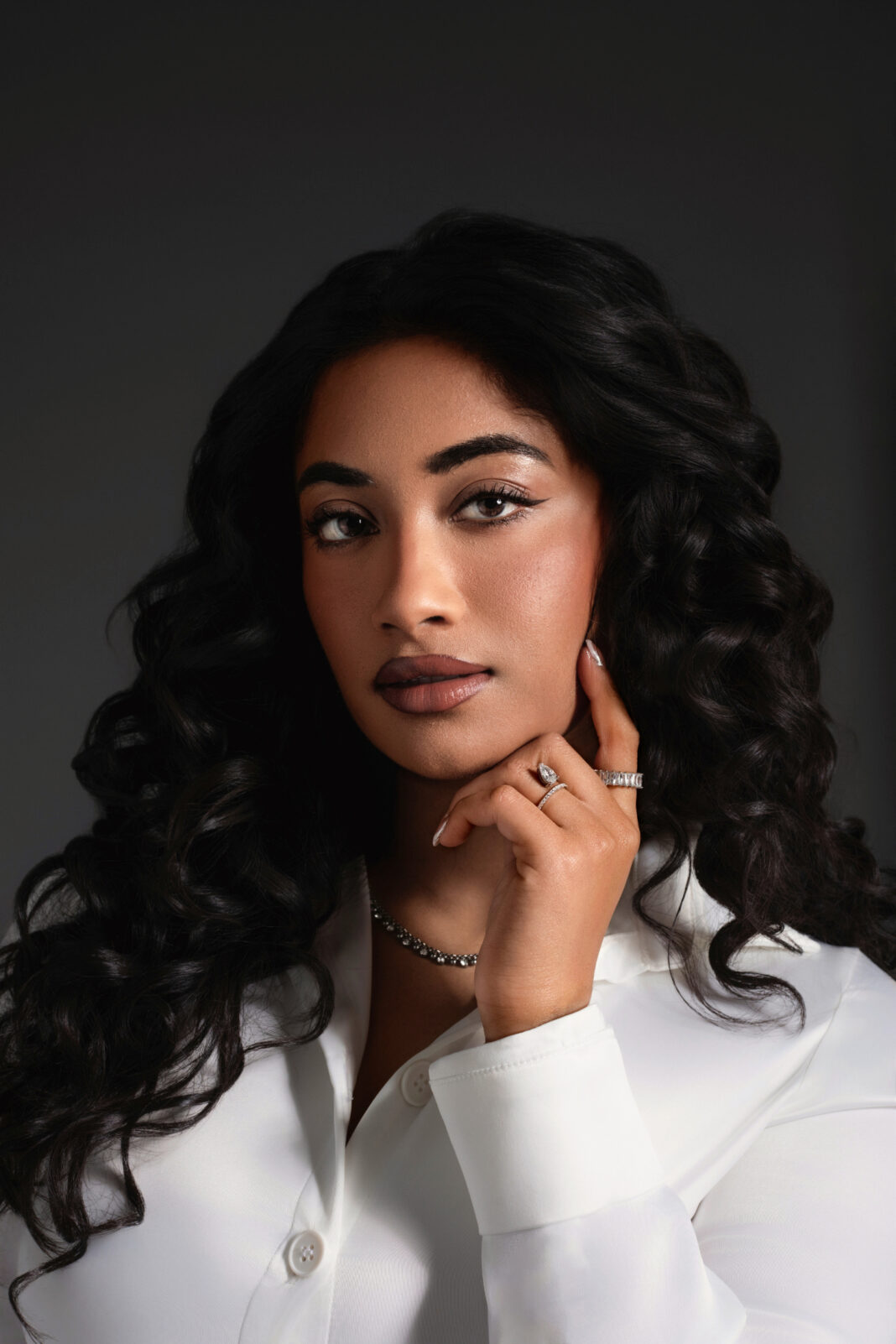
sat down with Monica Ravichandran—former software engineer turned viral beauty expert—for an exclusive look into her career pivot, the science behind her signature “lipstick color theory,” and her mission to reshape how beauty serves deeper skin tones. With 2.2 million followers and counting, Monica has built a movement rooted in inclusivity, problem-solving, and community-first content. Her newest venture: a collaboration with MOB Beauty to create her perfect red lipstick—a shade born from cultural legacy, personal experience, and chemistry-driven design.
The Transition: From Engineering to Beauty
Q: Monica, let’s start at the beginning—was software engineering always the plan?
Absolutely. I’ve always had a big-picture mindset, so I wanted a career that gave me both structure and transferable skills. I studied Computer Science at Cal Poly San Luis Obispo, one of California’s top engineering schools. My end goal was to become a product manager, and software engineering was my stepping stone toward that.
But when COVID hit right after graduation, plans shifted. I had landed a role at Twilio but had time before the job started. That’s when I began posting on social media just for fun—and things took off faster than I expected.
Pivoting Careers: A Leap of Logic and Passion
Q: Did you ever imagine becoming a beauty creator during your tech career?
Not at all. I was always the go-to makeup artist for my friends, but I never thought I’d post about it. During lockdown, with time on my hands, I started experimenting online. By October, I had hit 100,000 followers on TikTok. I was still working full-time at Twilio as a data engineer in fraud intelligence and honestly, I enjoyed it.
Eventually, I reached a crossroad—go full-time with content creation or pursue my original goal of becoming a product manager. I joined ShopStyle (now Collective Voice), where I helped develop influencer campaign systems. Ironically, that’s when my color theory video went viral.
Community as a North Star
Q: How did your upbringing shape your work ethic and creative drive?
My parents were cautiously supportive. They saw content creation as a hobby at first. My dad even bought me my first vanity and encouraged me to download TikTok—he used it to find recipes! My mom has fair skin and my dad has deep skin, and I’m in the middle. That spectrum helped me understand early on how makeup behaves differently across tones. It was the foundation for my future color theory content.
The Creator Economy: Longevity Over Virality
Q: Is there a shelf life for creators?
I think longevity depends on depth, not speed. I’m not here for quick virality. My growth has been slow and steady because I’m building a loyal community, not just followers. I focus on solving real problems—like helping people find makeup that actually works for their skin tone. I treat this like a marathon, not a sprint.
Problem-Solving in Beauty: The Business Side
Q: How do you merge your analytical background with content creation?
That’s what makes this journey so fulfilling—I get to apply all parts of myself. I’ve built a system: we track performance metrics, review analytics monthly, and listen closely to our community feedback. I’ve hired a team to help scale, but nothing gets posted without my input. Creators shouldn’t be afraid to treat what they do as a business.
Honesty First: Building Trust Through Reviews
Q: Your “No BS Reviews” are wildly popular. How do you maintain brand integrity?
Community comes first, always. I’m honest, even if it risks a brand deal. I won’t promote products that don’t serve a broad spectrum of skin tones. If something is marketed as “universal” and it clearly isn’t—especially for deeper tones—it gets called out. That honesty has built trust, and brands that align with that will stick around.
A few no-go brands? Charlotte Tilbury for limited inclusivity, and YSL and Dior for high cost but underwhelming results.
Creating the Perfect Red: A Personal and Cultural Mission
Q: Tell us about your collaboration with MOB Beauty.
Red lipstick is cultural in my family—my mom and grandmother wore it to their weddings. But iconic shades like MAC’s Russian Red or Ruby Woo never worked for me. I owned over 50 red lipsticks trying to find “the one.”
MOB Beauty invited me to their lab, and after experimenting, I returned with a mission: to create the perfect red for my wedding and my skin tone. We developed a custom shade from scratch—no brown liner hacks, no compromises. It’s not just a lipstick, it’s legacy, redefined.
Sustainability and Partnership Values
Q: What made MOB Beauty the right partner?
Their ethos aligned with mine—sustainable, vegan, cruelty-free, no plastics. But more than that, they involved me in everything. We did over 30 iterations to get the pigment right. They didn’t just slap my name on a product—they treated me like a co-creator.
Lessons from the Lab
Q: What surprised you most about product development?
Precision. A few grams of pigment can completely change a formula. Scaling those exact ratios up for mass production? Way harder than people think. It’s meticulous work—but deeply rewarding.
Looking Ahead: What’s Next for Monica Ravichandran?
Q: Will you build your own brand or go deeper into product development?
I’m exploring both. Being a brand founder excites me—especially if I can build something around color theory that fills industry gaps. I’m also tracking sales from my red lipstick to better understand product-market fit. There’s no roadmap in this career, but I’m building my own, one intentional step at a time.
Final Thoughts:
Monica Ravichandran isn’t just redefining beauty for deeper skin tones—she’s redesigning what it means to be a creator, technologist, and entrepreneur in one. Whether she’s writing code or blending pigments, her approach remains the same: solve the problem, build the community, and never compromise on truth.
Would you like a version of this for LinkedIn, a newsletter, or a visual infographic version as well?