Thousands of U.S. Flights Cancelled or Delayed Amid Air Traffic Reductions
More than 5,000 flights across the United States were cancelled or delayed on Friday as new federal mandates forced airlines to scale back operations amid the ongoing government shutdown.
The emergency measures, implemented at 40 of the nation’s busiest airports, are designed to ease pressure on air traffic controllers and other federal employees who continue to work without pay. The Federal Aviation Administration (FAA) ordered a 4% reduction in flights this week, with the cut expected to reach 10% by next week if the shutdown continues.
Essential workers have reported illness, fatigue, and financial strain as the shutdown—now the longest in U.S. history—stretches beyond a month.
Air Traffic Controllers at Breaking Point
Air traffic controllers, deemed essential personnel, must report to work despite missing multiple paychecks. Many have taken on side jobs or called in sick due to mounting stress, according to union representatives.
“The problems are only going to get worse,” said Nick Daniels, president of the National Air Traffic Controllers Association. “We’ll keep showing up to protect the flying public, but we can’t do our jobs indefinitely without pay. Congress needs to reopen the government.”
Transportation Secretary Sean Duffy told the BBC that international routes remain unaffected for now due to treaty obligations. However, he warned that domestic flight reductions could increase to 20% if staffing shortages persist.
Travel Chaos Spreads Across Major Hubs
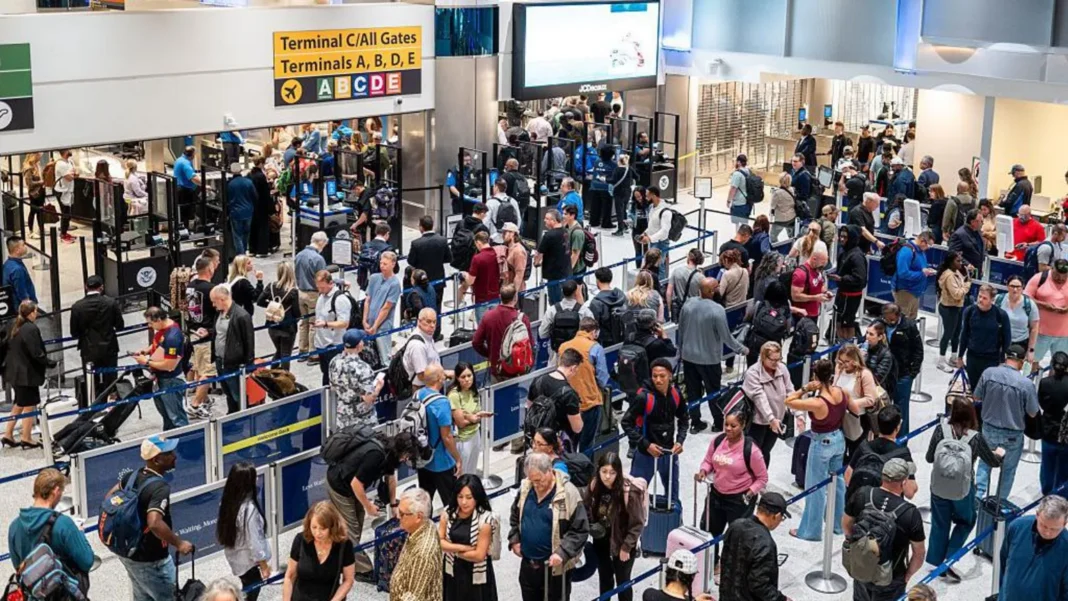
At airports nationwide—from New York and Washington, D.C. to Los Angeles and Chicago—frustrated travellers faced long lines, crowded terminals, and cancellation boards filled with red alerts.
Major carriers including Delta, United, and American Airlines issued rebooking waivers and refunds, even for flights not yet affected.
Joe Sullivan was en route to Reagan National Airport in Washington when his flight to Atlanta was abruptly cancelled.
“I was on my way to my cousin’s wedding,” he said. “I got rebooked for the next day—twelve hours later. I’ll still make the ceremony, but I’ll miss everything else.”
Some passengers turned to trains or buses. One traveller spent $300 on a seven-hour train ride to New York rather than risk another cancelled flight.
For others, the disruption hit even closer to home. Federal employee Ariana Jakovljevic, who has gone weeks without pay, said the shutdown has left her feeling anxious and uncertain.
“I just graduated college—this is my first real job. I thought I had stability, but now I’m wondering how long this can go on,” she said.
Safety Concerns Mount
Travellers expressed growing concern about the strain on unpaid aviation workers.
“I’m entrusting my life to people who aren’t getting paid,” said passenger Ben Sauceda. “They’re doing their best, but they’re under enormous stress trying to keep planes safe while worrying about feeding their families.”
Union leaders and aviation officials insist safety remains their top priority, but they warn that continued shutdown disruptions could have cascading effects on the entire air travel system.
A Crisis Beyond the Airports
The shutdown’s impact extends far beyond air travel. Federal food aid programs, national parks, and public health services have also faced funding interruptions, underscoring the widening toll of the political standoff.
Until lawmakers reach a funding agreement, Americans can expect further travel disruptions and continued strain on the country’s aviation infrastructure.